Kier-La Janisse Selects
Kier-La Janisse is a film writer, producer, acquisitions executive for Severin Films, creative director of Spectacular Optical Media, founder of the Miskatonic institute of Horror Studies and Adjunct Associate Professor in the School of Communication and Creative Arts at Deakin University. She is the author of Cockfight: A Fable of Failure (2024), House of Psychotic Women: An Autobiographical Topography of Female Neurosis in Horror and Exploitation Films (2012/2022) and A Violent Professional: The Films of Luciano Rossi (2007) and has been an editor on numerous books including Warped & Faded: Weird Wednesday and the Birth of the American Genre Film Archive (2021) and Satanic Panic: Pop-Cultural Paranoia in the 1980s (2015). She wrote, directed and produced the award-winning documentary Woodlands Dark and Days Bewitched: A History of Folk Horror (2021), produced the acclaimed blu-ray box sets All the Haunts Be Ours: A Compendium of Folk Horror (2021) and The Sensual World of Black Emanuelle (2023), and is the creator/showrunner of The Haunted Season on Shudder for which she made her first narrative film, The Occupant of the Room (2025). She is currently in development on several book and film projects. For more see kierlajanisse.com
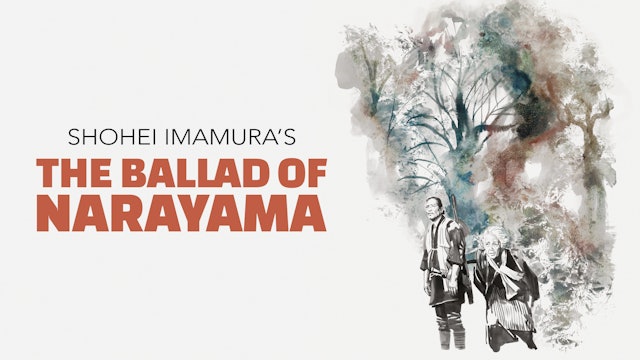
The Ballad of Narayama
Shohei Imamura, then experiencing a resurgence in his career as a narrative filmmaker after nearly a decade of focusing on television documentaries, won the Palme D’or in 1983 for this bleak adaptation of Shichirō Fukazawa’s first novel Narayama bushikō (1956) about the practice of ubasute, whereby the elderly are carried to a desolate place and abandoned to die. The practice is said to be folkloric and not a known custom in reality, and the film does have a strong atmosphere of folk horror about it - including a shocking moment which finds a reflection in Ari Aster’s Midsommar. I once traded Ed Neal a Polish poster for this film in exchange for him leading a tour of the Texas Chain Saw Massacre house.
Cold Light of Day
A fantastic, underseen take on the North London murders of serial killer Dennis Nilsen (1978-1983) - more recently explored in the Netflix series Des - from first time feature director Fhiona-Louise. 21 years old at the time of filming, Fiona-Louise was billed “the youngest ever female feature director” by her producer, but you wouldn’t guess it from how confident and assured the film is - no small feat considering that the Nilsen murders were relatively recent history at the time, which always invites derision. But Fhiona-Louise’s film stands up to scrutiny; it is, as its title suggests, cold and bleak, barely sensational given the gruesome nature of Nilsen’s crimes (he was a necrophiliac, found out when his dismembered victims turned up in chunks in the building’s drain pipes), instead mining the character work of the kitchen sink drama (no pun intended). Bob Flag – best known as the ubiquitous face of Big Brother in Michael Radford’s adaptation of Orwell’s 1984 – turns in a chilling performance as Dennis Nilsen.
The Falling
The Falling is among my favourites of those films added to the 10th anniversary expanded edition of my book House of Psychotic Women. Carol Morley’s dreamy teen psychodrama is set a British girls school in 1969 and explores a particular brand of hysteria that ensues among the school’s population in the aftermath of a classmate’s sudden death (Florence Pugh in her screen debut). As I wrote in my book, the influence of Peter Weir’s Picnic at Hanging Rock looms large over the proceedings, from the schoolgirls’ fascination with a central blonde, absent protagonist to the contagion of her budding sexuality which is expressed through mass fainting. Inspired by a real case, and no doubt informed by Morley’s previous exploration of mass mania in her 2006 film The Madness of the Dance, The Falling also taps into a longer history of girls coming-of-age/boarding school stories, mining the magical appeal of children’s books like Charlotte Sometimes and Marianne Dreams; it is the girl’s coming of age as a perilous supernatural journey.
Hounds of Love
Australians make the best true crime films. It would be easy to make a joke about it being a country founded by criminals (and indeed, I have made that joke many times) but it’s just a hard fact that the best true crime films hail from Australia (not to mention the best prison films – Stir, Ghosts of the Civil Dead and the series Prisoner: Cell Block H are all Australian). And by “best” I mean most harsh and depressing. Hounds of Love – based on the 1986 crimes of Western Australian couple David and Catherine Birnie, though the filmmakers tried to deny it, likely for legal reasons – is tonally closer to Rowan Woods’ The Boys (1998) or Justin Kurzel’s 2011 Snowtown (and later, his 2021 film Nitram, about the Port Arthur Massacre) than something like Wolf Creek. A devastating watch.
Massacre at Central High
If you have ever wanted to see Mary Bradford from Eight is Enough get naked and crushed by a giant boulder, this is the film for you. Aside from that selling point, some personal trivia about Massacre at Central High:
1. I once put on a double bill of Massacre at Central High and Lemora: A Child’s Tale of the Supernatural where we held a live séance in the theatre during which Lemora director Dick Blackburn attempted to reach Rainbeaux Smith from beyond the grave
2. My friend Kelly Salerno fainted at the sight of a frilly dress in this film
3. Heathers screenwriter Daniel Waters told me this film was the bane of his existence
4. I made a mixtape partially inspired by it that you can hear at: https://www.mixcloud.com/kierlajanisse/volcanoes-a-high-school-horror-mixtape/
Over the Edge
If there is one film that I will drop everything to watch no matter how many times I’ve seen it, it’s this one. Juvenile delinquent films are a soft spot for me, and they hit a peak period internationally in the late 1970s-early ‘80s, ranging from European fare like Germany’s North Sea is Death Sea and Christiane F. or the Spanish Quinqui films to American pictures both dark (Out of the Blue) and mischievous (Little Darlings). But Over the Edge, in my mind, remains the quintessential JD film. Unlike 1960s teens rebelling to escape the constraints of their repressed parents, the ‘70s kids were children of neglect, the second generation of latchkey kids, and as Over the Edge’s opening square-up indicates, its planned community New Granada (with events modeled on those of Foster City, California) made no accommodation for the fact that 25% of its population was under the age of 15. Anchored by young, non-professional actors – although some, like Matt Dillon, would go on to further screen careers – and supported by a solid cast of adult character actors (including the brilliant Harry Northup as the kids’ nemesis, Sergeant Doberman), Jonathan Kaplan’s teen battlecry is moodily scored by his father Sol Kaplan alongside a host of anthemic pop songs by Cheap Trick, The Ramones and more.
Putney Swope
This riotously funny film may be the outlier in my otherwise bleak and depressing list of recommendations, but I can’t resist the opportunity to plug a book I just co-edited called Truth & Soul: A Robert Downey Sr. Reader. Downey’s send-up of Madison Avenue politics – in which an African American ad man is accidentally voted in as the new company president, ousts most of the white staff and renames the company Truth & Soul with the exhortation “Rockin’ the boat’s a drag, what you gotta do is SINK THE BOAT!” – is one of the greatest satires in American cinema. Historian Skip Gates praised it as a pivotal inspiration, Toms, Coons, Mulattoes, Mammies, and Bucks (1973) author Donald Bogle criticized it as highly problematic, and Boots Riley claimed he never saw it before making his own satire Sorry to Bother You in 2018. Despite Bogle’s misgivings, on its release it was largely perceived as a progressive film (bearing in mind most film critics at the time were speaking from a position of white privilege), its abrasive, confrontational humour derived from anti-establishment tricksters the Marx Brothers (making it a Marxist film in more ways than one!)
Tenderness of the Wolves
The Andy Warhol Factory-adjacent artists get a lot of ink, but the extended Fassbinder family deserves some love too – and Tenderness of the Wolves director Ulli Lommel is a fascinating point of intersection, having strong associations with both. Written by and starring fellow Fassbinder associate Kurt Raab as WWI-era necrophilic serial-killing pedophile cannibal Fritz Haarman, otherwise known as “the Ogre of Hanover” (at least according to the serial killer trading cards I had as a teenager), Lommel’s film places Haarman at the center of a social scene that facilitates his clandestine sale of human meat and traces his exploits as he uses his job as a government inspector to identify vulnerable youth he can prey upon. It manages to combine starkness and silence with theatricality and melodrama, and despite the potential for camp, it remains indelibly sad.
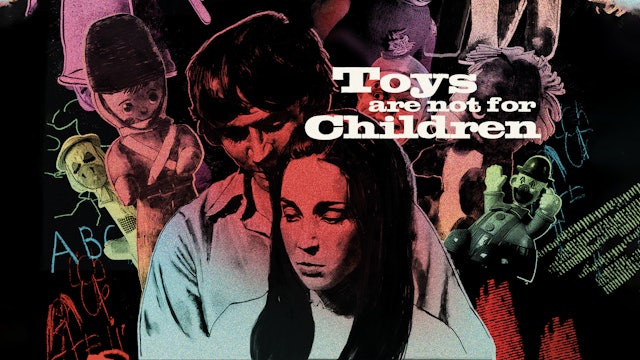
Toys Are Not for Children
One of the great injustices of home video history is the fact that I was not invited to be a part of Arrow’s blu ray release of Toys Are Not for Children. Seeing this psychosexual headscratcher in a packed cinema of unsuspecting moviegoers nearly 25 years ago was a truly life-altering experience – the audience was squirming like none before or since, literally trying to melt into their chairs to get away from the abomination onscreen. I don’t think I have ever laughed so hard (other than that time a guy dropped his hamburger and it rolled down the street like a wagonwheel while he ran after it). While I think it is to your greatest advantage to go into this film blind, I will just say it is about a girl who loves her toys and loves the daddy who gave them to her. And she loves them both a little too much.

-
The Ballad of Narayama
Throughout the 1980s, Shohei Imamura (The Pornographers, Profound Desires of the Gods), a leading figure of the Japanese New Wave era of the 1960s, cemented his international reputation as one of the most important directors of his generation with a series of films that all competed at Cannes to ...
-
Cold Light of Day
February, 1983. Detectives are called to a residential address in the London suburbs following reports that the drains have been clogged by human remains. One of the property’s residents, Dennis Nilsen – a mild-mannered and unassuming civil servant – is brought in for questioning, leading to the ...
-
Massacre At Central High
1976 • United States • Directed by Renee Daalder
When David (Derrel Maury) arrives at Central High, he discovers it is lorded over by a gang of bullies who rule through intimidation and violence. David's friend Mark (Andrew Stevens, THE FURY) encourages him to join this dominant clique, but inst...
-
Putney Swope
1969 · United States · Directed by Robert Downey Sr.
The board of directors at a Madison Avenue ad agency must elect a new chairman. In the maneuvering to make sure that enemies don't get votes, all the members accidentally cast their ballot for the board's token black man, Putney Swope.
-
Toys Are Not For Children
Psychological trauma and aberrant sexuality abound in this twisted 1972 tale of a young woman whose severe daddy issues send her on an unforgettably bleak downward spiral. Yearning for the love of her absentee father, Jamie inhabits an infantilised world surrounded by toys, including those which ...